

Building a Story World: I Went Looking for One Building and Came Back with an Entire World
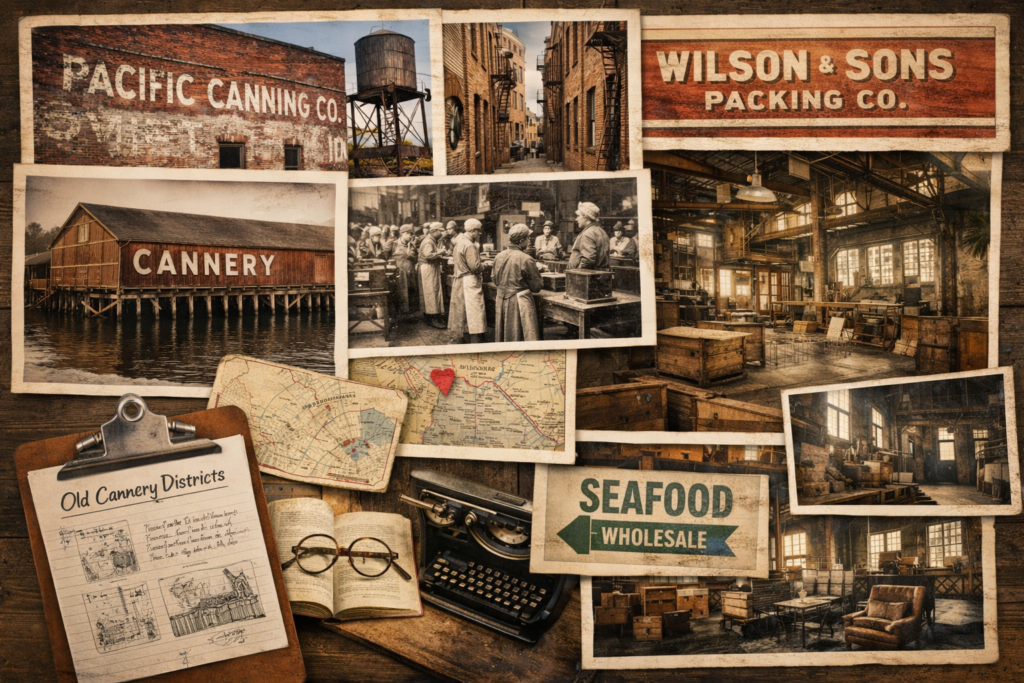
When I started researching for my upcoming series, The Altered, I thought I was looking for a building.
That sounded simple enough. I needed a home base for the team. A place they would keep coming back to. A place where plans get made, people recover, arguments happen, meals get eaten, and somebody is always pretending they’re fine, even when they’re not.
In The Altered, that place is The Row.
And almost as soon as I started really thinking about it, I realized I wasn’t just looking for a setting. I was trying to build a story world.
At first, I did what probably makes sense to most writers. I poked around photos and bits of history from old cannery districts because I liked the feel of them. Old brick and industrial bones. A building with enough age and weight to feel like it had already lived a life before my characters ever stepped inside. Something I’d be able to picture and feel while I was writing.
I was thinking about practical things, like what kind of building would work, what the layout would need to be, and what would make it feel grounded and memorable instead of generic. I’m a plotter and I like details. Then I started reading Houston Howard’s book about story worlds.
That sent me down a whole different rabbit hole.
All at once, I was no longer only thinking about the building itself. I was thinking about what makes a fictional world feel like it exists even when the main characters aren’t on the page. That is the part that really caught me, because that’s what I want with this series. I want a world that feels bigger than one story, or two, or even ten.
I don’t want a world where, if you swapped out the characters, the setting would collapse into something generic. I also don’t want a place that only matters because important scenes happen there. I want the opposite. I want the world to have its own pull, its own history and texture, and its own rules.
I want it to feel like a place that would still be interesting on an ordinary Tuesday, even if nobody was saving anyone.
That is what I keep coming back to as I work on The Row.
Yes, it needs to function as a home base, and it needs to support the story. But it also needs to feel lived in. I want readers to be able to picture people patching each other up there, eating in the kitchen, arguing in hallways, training, resting, avoiding hard conversations and having them anyway. I want it to feel like the place where their lives actually happen, not just where the big scenes take place.
And for me, part of that is knowing the space well enough that I can see it in my own mind while I’m writing. I want to know where the dining room table is, how the couches sit in front of the fireplace, and which rooms someone passes on the way to the command center. If I can see The Row clearly, then hopefully I can describe it clearly enough that readers can picture it too, and come to know it as well.
Once I started looking at it that way, I stopped thinking only about what the building looked like and started thinking about what my characters would need it to do. That is how The Row ended up with things like a rooftop garden and a place to get away from the world for a few minutes. It is how it ended up with showers in the basement for when they come back from a mission and don’t exactly smell fresh enough to be in the company of others. I also left one floor unfinished on purpose, because I like the idea that the building can change and grow along with the characters and the series. I also started thinking about who these characters are and what roles they play, and that shaped some of the more practical spaces too, like a command center and a fully equipped med room.
To me, that is when a setting starts to feel real. It stops being background and starts feeling like an important part of the story.
I think that is also why this kind of research can get away from me so fast. I can start with something that sounds completely manageable, like finding the right building, and end up asking much bigger questions. What kind of world are these characters living in? What does that world say about them? What holds it together when nobody is looking directly at it?
Those are the questions that followed me out of the cannery photos and into the bigger shape of the series. Will all of that end up in the books? Probably not. But if I can make the place feel real to the reader, and like somewhere they’d want to visit, even if it’s a little dangerous, then I’ve done what I set out to do.
So my research started with a building, but it didn’t stay there. It turned into a deeper look at what gives a setting life. Not just usefulness, and not just atmosphere, but life.
That’s what I want for The Altered. I want the world to feel like more than a backdrop. I want it to feel like a real place in the story, not just somewhere the characters pass through.
Which is a long way of saying that I went looking for one building and came back thinking about how to build an entire world.
And now I’m excited to get back to writing and see what happens in that world.